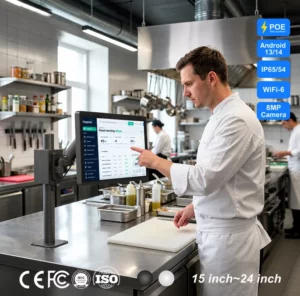

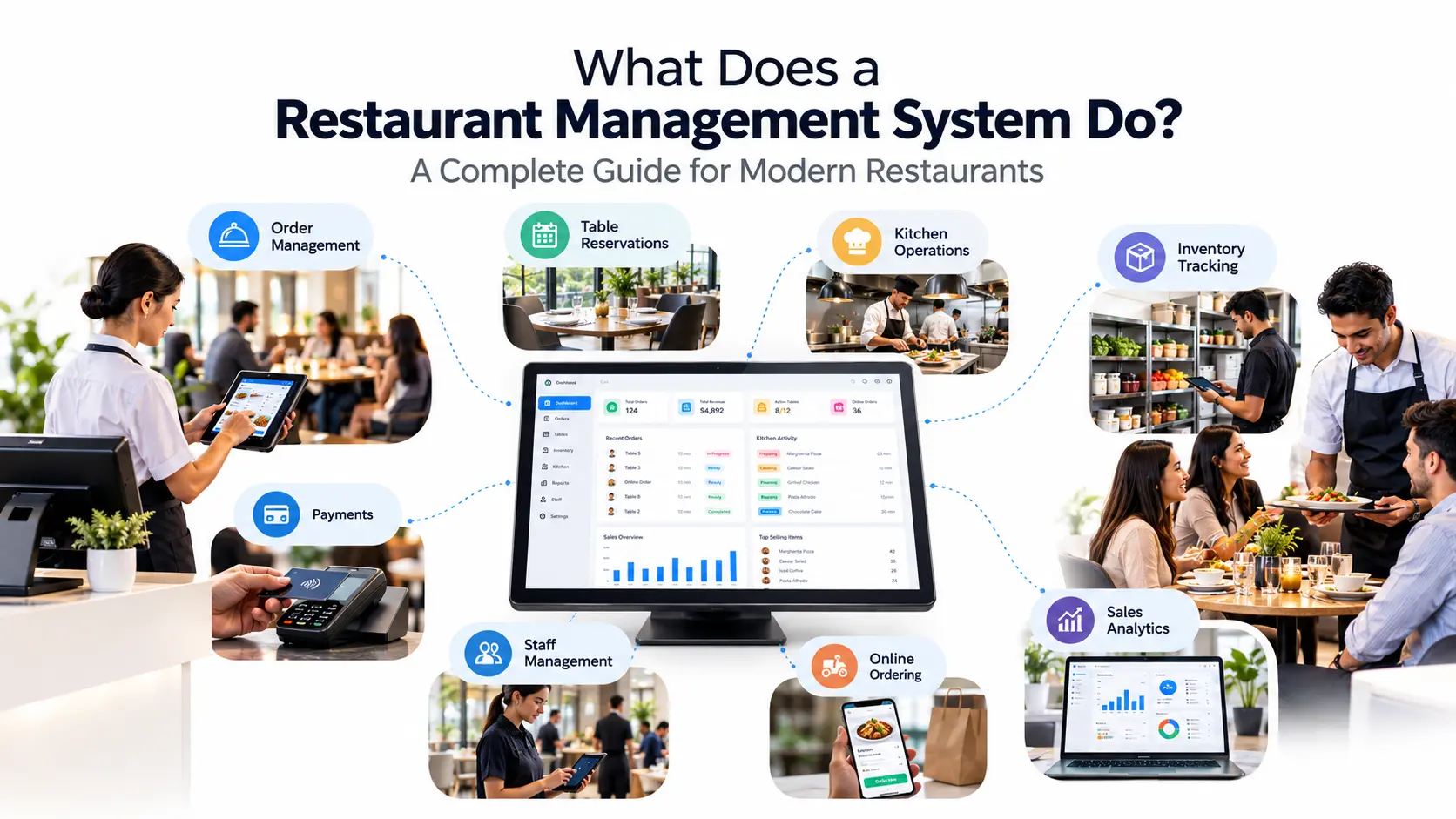
Running a restaurant involves hundreds of daily activities happening at the same time.
Customers place orders, staff manage tables, kitchens prepare meals, managers track inventory, and owners monitor business performance.
When these operations are handled through separate tools, spreadsheets, or manual processes, restaurants often experience:
- Slow service
- Order mistakes
- Poor communication between teams
- Inventory problems
- Limited business visibility
A restaurant management system solves these challenges by connecting the different parts of restaurant operations into one centralized platform.
Modern restaurant management software helps businesses manage:
- Orders
- Payments
- Kitchen workflows
- Tables and reservations
- Inventory
- Staff
- Customers
- Analytics
Instead of managing disconnected systems, restaurants can operate through one connected workflow.
What Is a Restaurant Management System?
A restaurant management system is software designed to organize, automate, and connect restaurant operations.
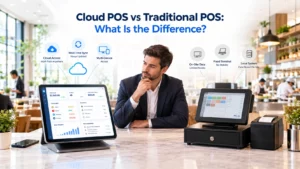
Unlike a traditional POS system that mainly focuses on sales transactions, a complete restaurant management platform manages the entire restaurant ecosystem.
It combines:
- Point of sale
- Order management
- Kitchen operations
- Inventory control
- Customer management
- Employee workflows
- Reporting and analytics
The goal is to help restaurant teams work faster while giving owners better control over daily operations.
How Does a Restaurant Management System Work?
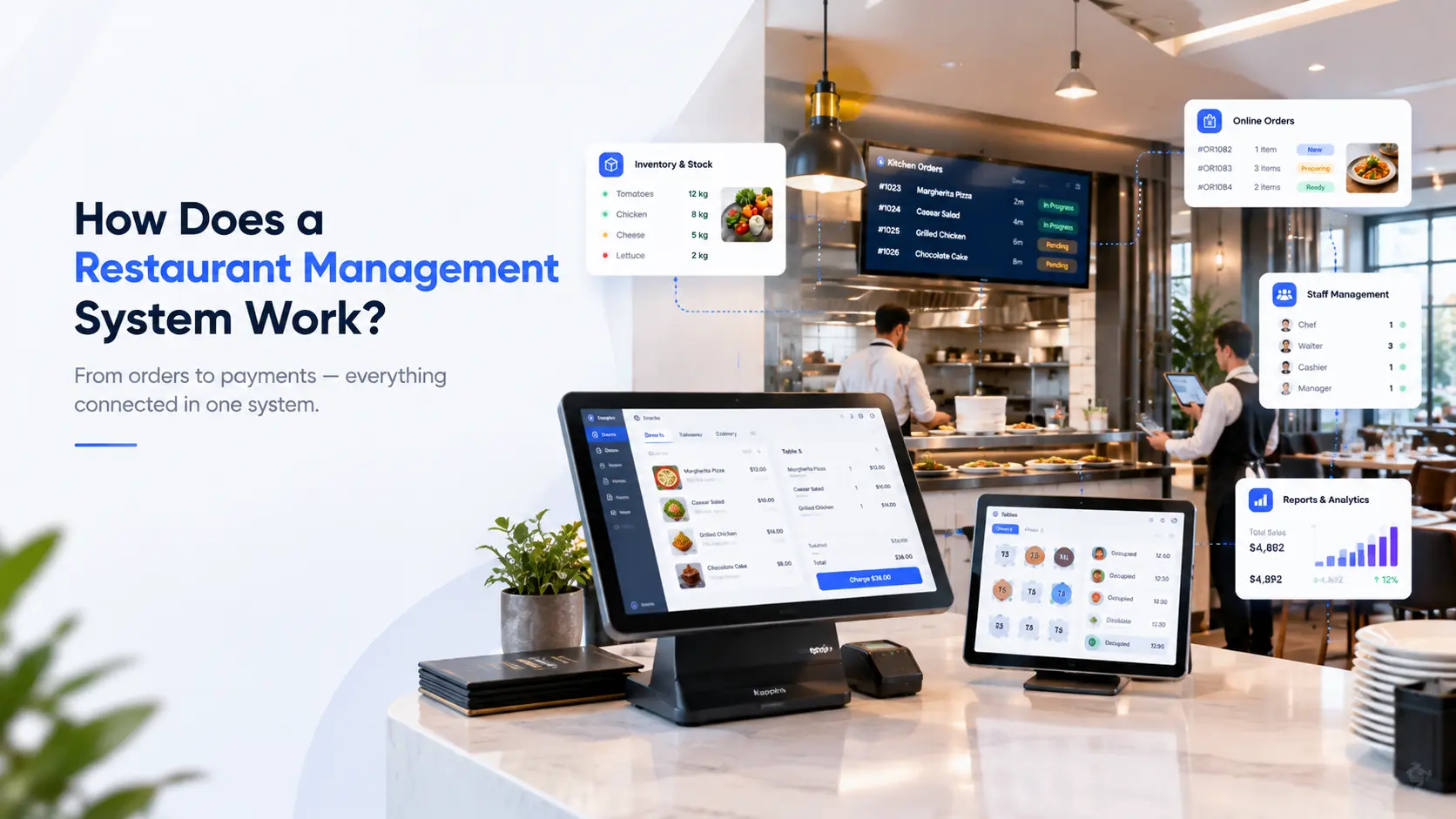
A restaurant management system creates a connected flow between customers, employees, and business operations.
For example:
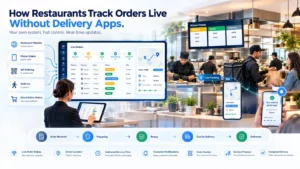
- A customer places a dine-in order.
- The order is automatically sent to the correct kitchen station.
- Kitchen staff update preparation status.
- Front-of-house employees can monitor progress.
- Payment is processed through the POS.
- Sales and operational data become available through reports.
This eliminates unnecessary communication delays and creates a smoother restaurant workflow.
Key Functions of a Restaurant Management System
1. Restaurant Order Management
Orders are the center of every restaurant operation.
A modern restaurant order management system helps restaurants manage different order types from one place.
It supports:
- Dine-in orders
- Takeaway orders
- Delivery orders
- Online ordering
- Multiple service channels
With digital order management, restaurants can reduce manual mistakes and improve communication between customers, servers, and kitchen teams.
Learn more about how Kappino manages restaurant orders with its restaurant order management system.
2. Restaurant POS and Payment Management
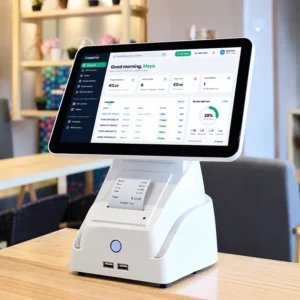
A restaurant POS system is an essential part of restaurant operations.
A modern POS helps teams:
- Create orders
- Process payments
- Manage bills
- Apply discounts
- Split payments
- Track transactions
However, modern restaurant management systems go beyond billing.
They connect POS data with inventory, customers, analytics, and operational workflows.
Explore how Kappino helps restaurants manage sales with its restaurant POS software.
3. Kitchen Management and Kitchen Display System
Kitchen communication is one of the biggest operational challenges for restaurants.
A restaurant management system improves kitchen efficiency by sending orders directly to preparation areas.
Kitchen teams can:
- Receive orders instantly
- Organize preparation queues
- Track cooking progress
- Manage multiple stations
For example:
- Pizza orders → Pizza station
- Drinks → Beverage station
- Desserts → Dessert station
This creates better coordination between front-of-house and kitchen teams.
4. Table and Reservation Management
Managing restaurant tables manually can create:
- Booking conflicts
- Long waiting times
- Poor seating organization
A restaurant management system helps restaurants manage:
- Table availability
- Guest bookings
- Seating plans
- Reservation information
A dedicated restaurant reservation management system helps restaurants improve guest experiences while maximizing table usage.
5. Inventory and Stock Management
Food costs directly affect restaurant profitability.
A restaurant inventory management system helps businesses monitor:
- Ingredients
- Stock levels
- Suppliers
- Purchasing
- Waste
Instead of discovering shortages after they happen, managers can identify inventory issues earlier.
Benefits include:
- Better stock control
- Reduced waste
- Improved purchasing decisions
- More accurate food cost tracking
Kappino provides tools for managing restaurant stock through its inventory management system.
6. Staff Management
Restaurant teams need clear workflows and responsibilities.
A restaurant management system helps managers organize:
- Employee roles
- Permissions
- Scheduling
- Team operations
This improves accountability and helps staff focus on customer service.
Discover how Kappino supports restaurant teams with restaurant staff management.
7. Customer Management and Loyalty
Customer relationships are essential for restaurant growth.
Modern restaurant management software can track:
- Customer preferences
- Order history
- Visit frequency
- Loyalty activity
This information helps restaurants create personalized experiences.
A connected restaurant CRM solution allows businesses to understand customers and build stronger relationships.
8. Restaurant Analytics and Reporting
Restaurant owners need accurate information to make better decisions.
A restaurant management system provides insights into:
- Sales performance
- Popular menu items
- Revenue trends
- Customer behavior
- Operational performance
Analytics help owners understand what is working and where improvements are needed.
Explore restaurant performance insights with restaurant analytics software.
Benefits of Using a Restaurant Management System
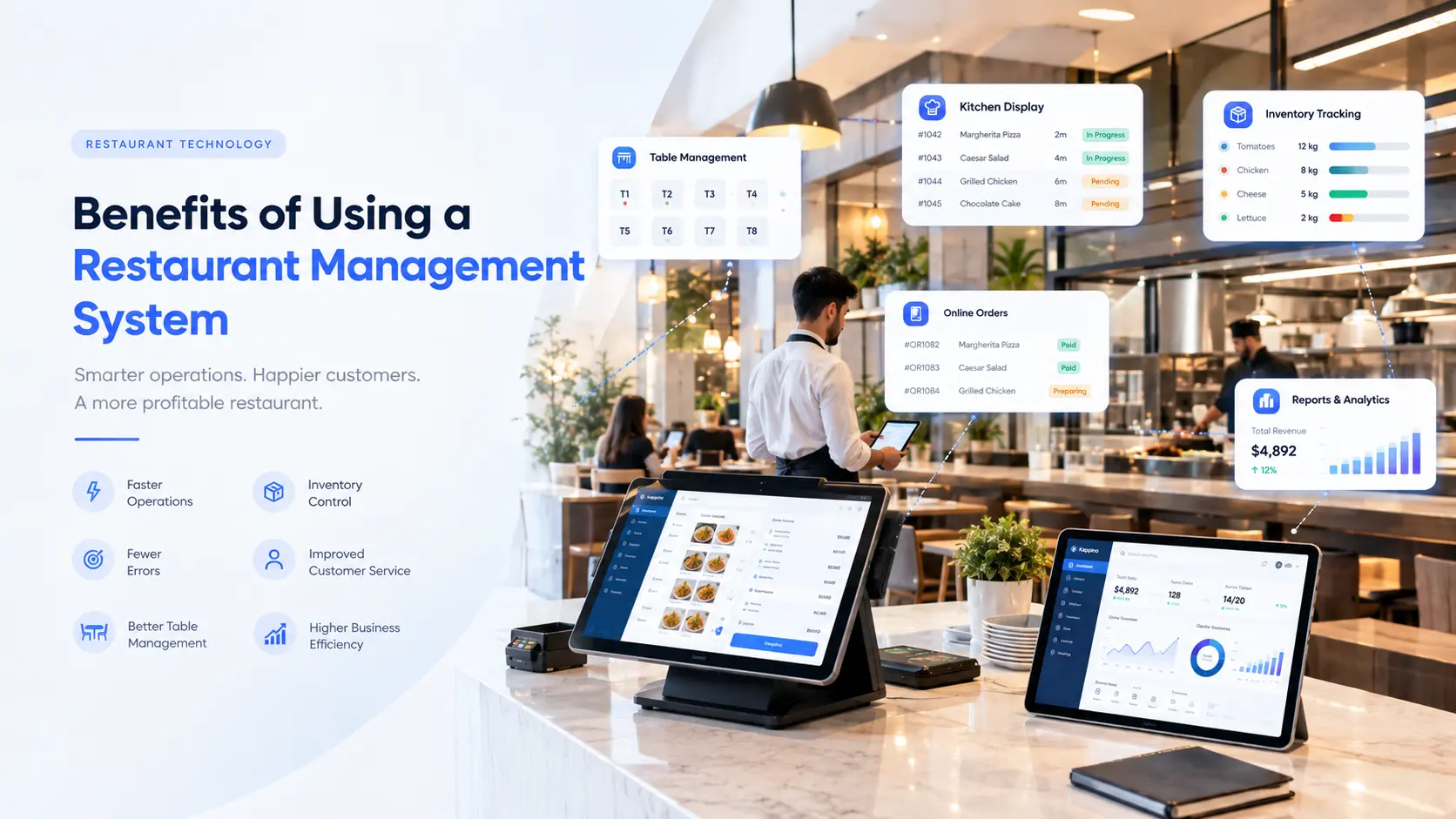
Faster Daily Operations
Connected workflows allow teams to complete tasks faster. Orders move smoothly from customers to kitchens without unnecessary delays.
Fewer Errors
Automation reduces mistakes caused by:
- Manual order entry
- Incorrect communication
- Billing errors
- Inventory tracking problems
Better Cost Control
Restaurants gain better visibility into:
- Food usage
- Stock movement
- Waste
- Sales performance
Improved Customer Experience
Customers benefit from:
- Faster service
- Accurate orders
- Better reservations
- Personalized interactions
More Control for Restaurant Owners
Owners can monitor operations through real-time information instead of relying on assumptions.
Who Needs a Restaurant Management System?
Independent Restaurants
Small restaurants can use management software to simplify operations and improve efficiency.
Cafés and Bars
A connected restaurant system helps cafés manage:
- Fast ordering
- Payments
- Inventory
- Customer relationships
Cloud Kitchens
Cloud kitchens benefit from:
- Multiple order channels
- Kitchen workflow management
- Delivery coordination
Restaurant Chains and Multi-Location Businesses
Multi-location restaurants need centralized control.
A multi-branch restaurant management system helps businesses manage:
- Multiple locations
- Central reporting
- Operational consistency
Restaurant Management System vs Traditional Restaurant Operations
| Traditional Restaurant Operations | Restaurant Management System |
|---|---|
| Manual orders | Digital order workflow |
| Separate tools | Connected platform |
| Limited reporting | Real-time analytics |
| Manual inventory checks | Automated stock tracking |
| Communication gaps | Connected teams |
What Features Should a Modern Restaurant Management System Include?
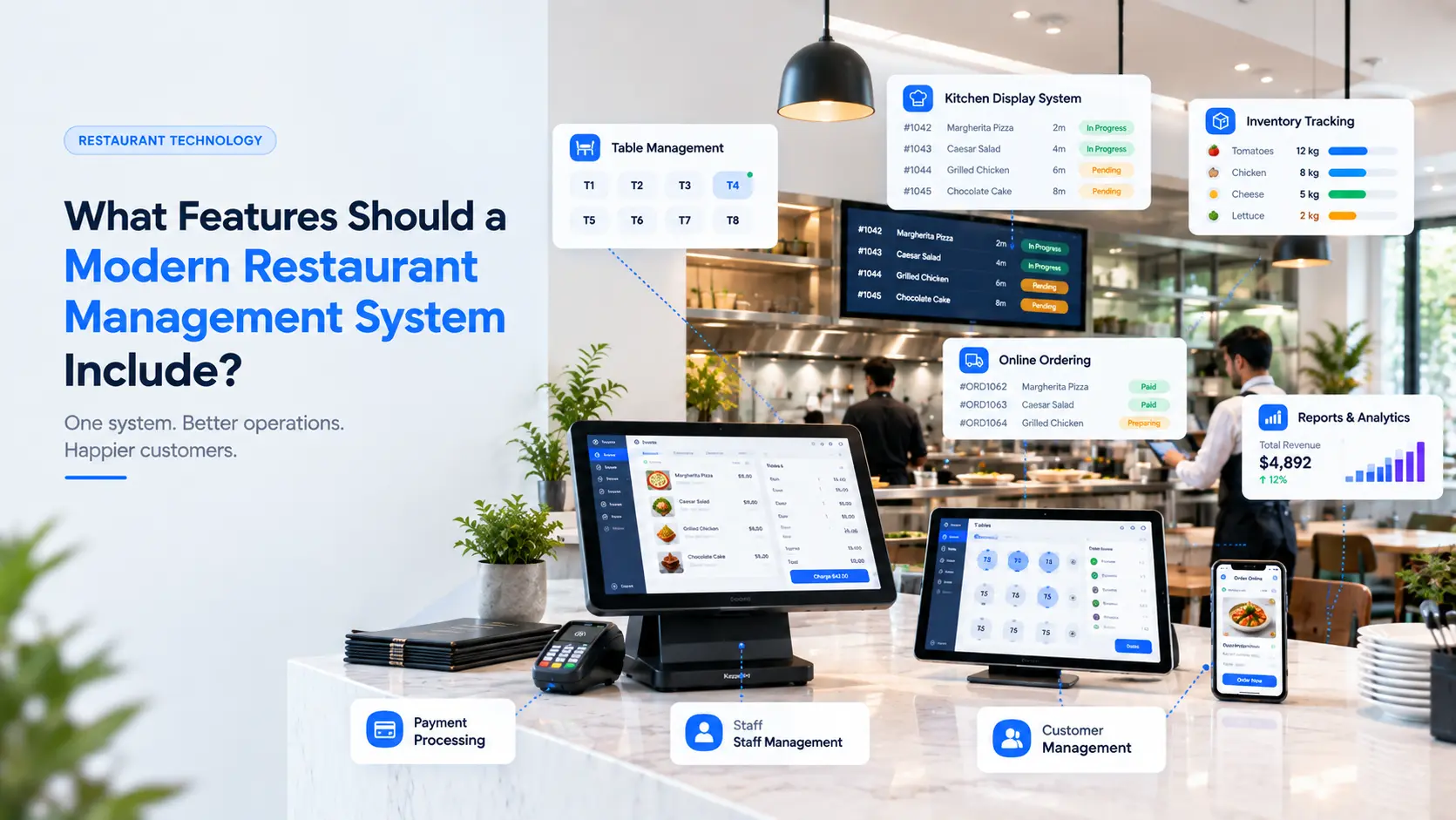
A complete restaurant management platform should include:
- Restaurant POS
- Order management
- Kitchen display system
- Reservation management
- Inventory tracking
- Staff management
- Customer CRM
- Analytics dashboard
- Multi-location support
- AI-powered automation
How AI Is Changing Restaurant Management Systems
Artificial intelligence is making restaurant software smarter. AI-powered restaurant systems can help businesses:
- Answer customer questions
- Support ordering conversations
- Predict demand
- Improve inventory planning
- Identify operational trends
Kappino combines restaurant management capabilities with AI-powered tools to help restaurants automate repetitive tasks and improve decision-making.
Learn more about AI-powered restaurant software.
Frequently Asked Questions
Is a restaurant management system the same as a POS system?
No. A POS system mainly manages sales and payments, while a restaurant management system connects POS with other operations like inventory, reservations, customers, staff, and analytics.
Can small restaurants use restaurant management software?
Yes. Modern restaurant management systems are designed for small restaurants, cafés, cloud kitchens, and large restaurant groups.
Does restaurant management software help reduce costs?
Yes. Better inventory tracking, fewer mistakes, and improved reporting help restaurants control operational costs.
Why do restaurants need a management system?
Restaurants need management systems to simplify operations, improve communication, reduce manual work, and gain better visibility into business performance.
Conclusion
A restaurant management system does much more than process payments. It connects every important part of restaurant operations, from orders and kitchens to inventory, reservations, customers, staff, and analytics.
For modern restaurants, the biggest advantage is not just automation. It is having one connected system where every team works with the same information. A connected restaurant operation helps businesses deliver better service, improve efficiency, and make smarter decisions.
Kappino helps restaurants bring their entire operation together in one connected platform.