

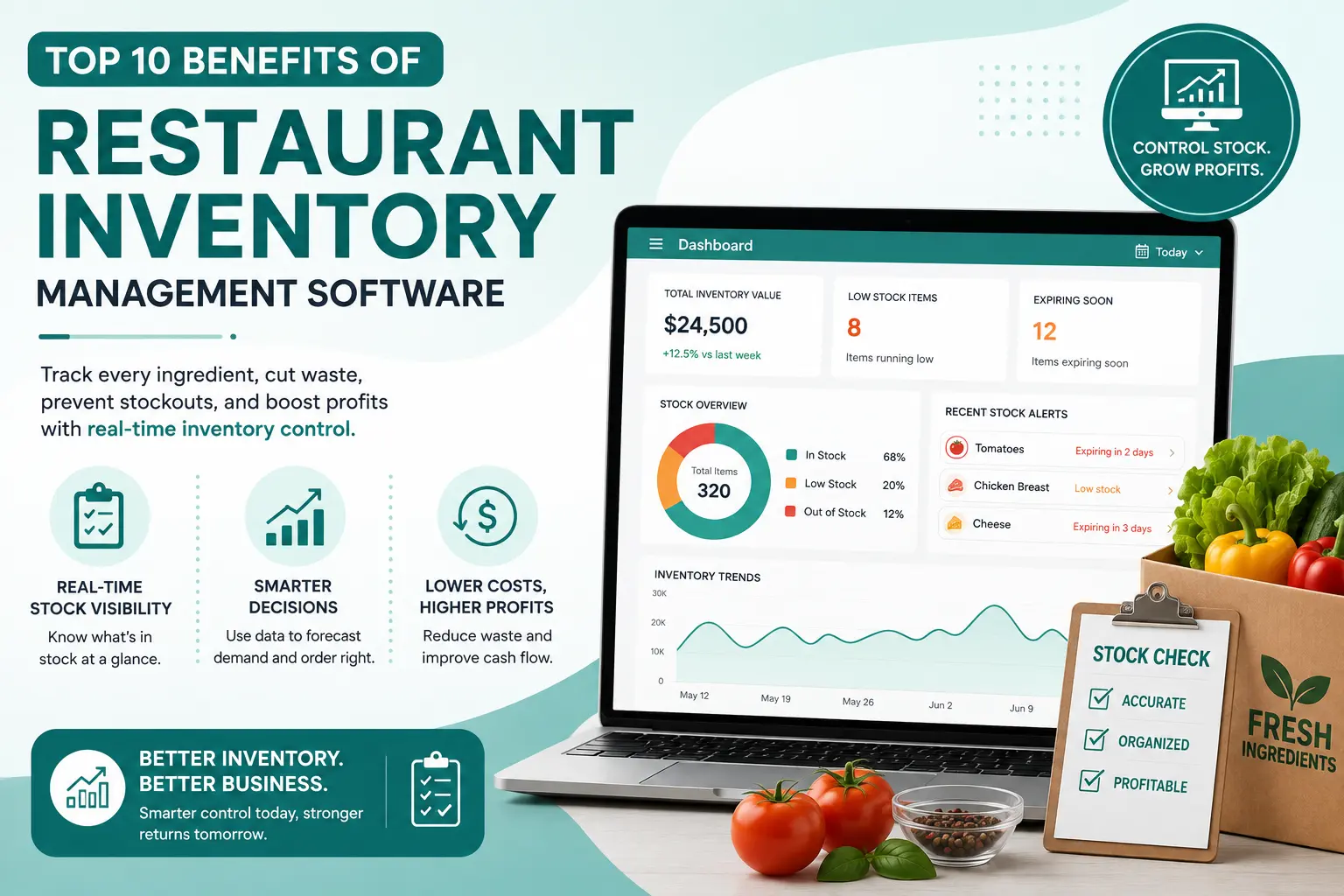
You're in a mid-dinner rush. A chef reaches for tomatoes and the bin's empty. Somewhere in the walk-in, three cases of chicken you already have are sitting untouched, because someone just reordered them. Sound familiar?
Between managing staff, keeping customers happy, and getting the food right every single time, your storeroom is the one thing that quietly slips through the cracks. And those small mistakes? They add up fast, eating into your profits every single day.
The right restaurant inventory tracking software fixes this. It tracks your stock, cuts your waste, and saves you money, so you can focus on what actually matters: the food. Here's why it matters so much for restaurants like yours.
Quick Answer: Restaurant inventory management software gives you real-time visibility into your stock, so you order accurately, cut food waste, and stop running out of bestsellers mid-service. It automates purchase orders, forecasts demand from your sales history, and flags items nearing expiration for food safety compliance. For most restaurants, the software pays for itself through lower waste and tighter cash flow within the first few months.
Importance of Inventory Management Software
Before diving into the benefits, it helps to understand why this matters so much for your restaurant in the first place.
Food waste is quietly draining your margins right now, whether you know it or not. Poor storage, over-ordering, inaccurate stock counts: these mistakes don't announce themselves, they just chip away at your profit every single month. When you use a reliable restaurant inventory system to monitor your stock and sales closely, you spend less and plan better, because you always know what's actually moving off your shelves. A good food cost management tool turns that raw data into decisions that protect your bottom line. That's exactly why you're seeing more restaurant owners and managers ditch spreadsheets and paper logs for good.
Benefits of Inventory Management Software
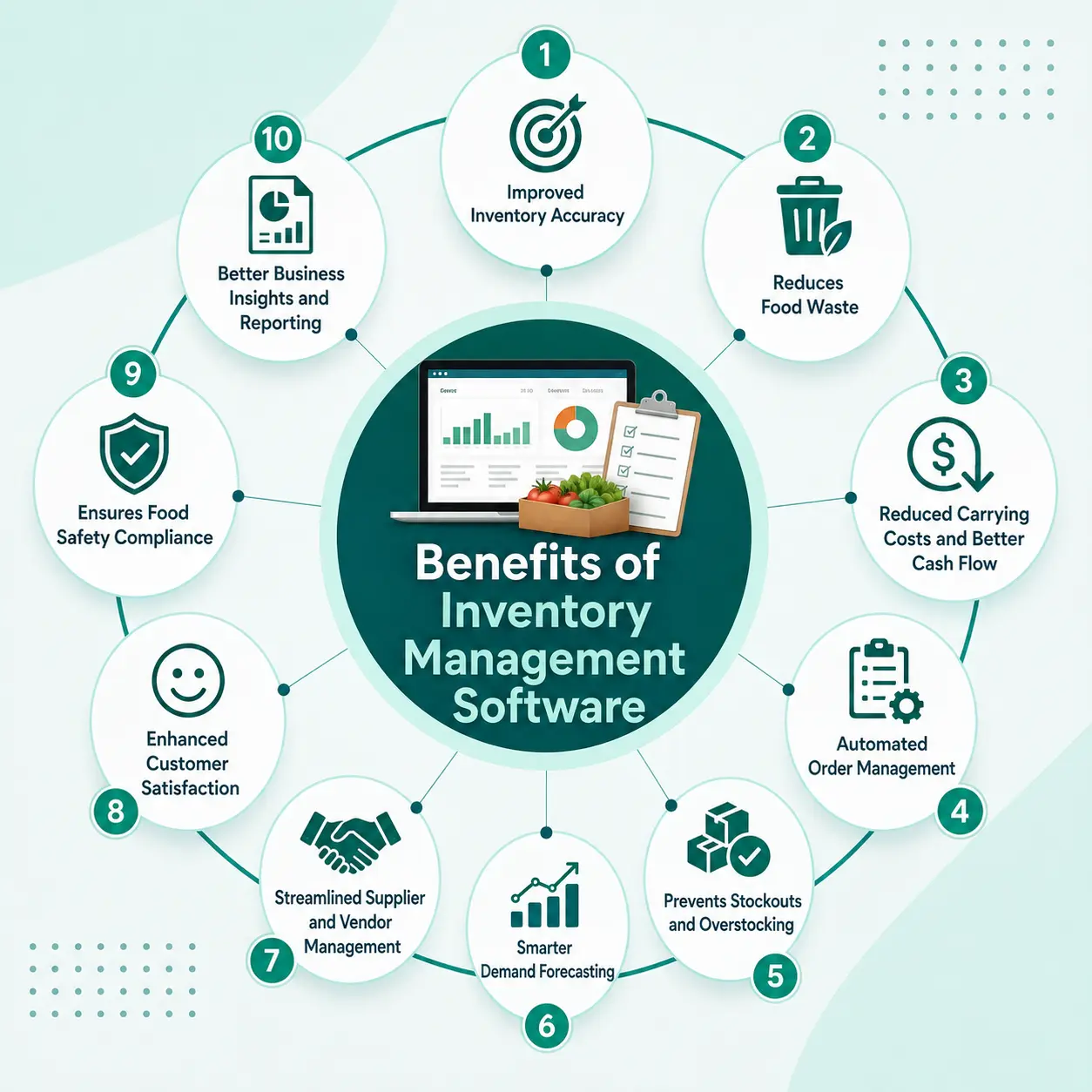
- Improved Inventory Accuracy
- Reduces Food Waste
- Reduced Carrying Costs and Better Cash Flow
- Automated Order Management
- Prevents Stockouts and Overstocking
- Smarter Demand Forecasting
- Streamlined Supplier and Vendor Management
- Enhanced Customer Satisfaction
- Ensures Food Safety Compliance
- Better Business Insights and Reporting
Improved Inventory Accuracy
Manual stock counts almost always lead to mistakes that throw off your numbers. A solid real-time inventory tracking system fixes this for you:
- Keeps a live, accurate record of your stock levels
- Removes guesswork so your team always knows what's on the shelves
- Gives your whole kitchen one reliable number to work from
You stop relying on a manager's memory or a clipboard that's three days out of date. Every count ties back to actual sales and deliveries, so the number on the screen matches what's really in the walk-in.
Reduces Food Waste
Expired ingredients and miscalculated portions quietly cost you money every week. The right stock tracking tools support food waste reduction and help you catch this early:
- Alerts you before items near their expiration date
- Helps you order based on your actual usage, not guesswork
- Cuts your waste and shrinks your environmental footprint over time
Many systems also support FIFO tracking, so older stock gets used before newer deliveries hit the shelf. That alone can shave real dollars off your weekly waste log.
Reduced Carrying Costs and Better Cash Flow
Too much stock sitting in your storeroom ties up cash you could use elsewhere. Smarter stock control supports better restaurant cash flow management by keeping things balanced for you:
- Helps you order just the right amount, not more
- Frees up your cash for other expenses like payroll or equipment
- Lowers your unnecessary storage costs
Less cash locked up in unused inventory means you can react faster to a slow month or a sudden opportunity, like a supplier discount, without scrambling for working capital.
Automated Order Management
Manual ordering eats up your time and leaves room for error. A restaurant order management system takes that off your plate:
- Generates purchase orders automatically when your supplies run low
- Reduces your missed orders and last-minute rush deliveries
- Saves you hours of paperwork every week
A restaurant inventory system that automates ordering also cuts down on duplicate orders, the exact problem that leaves you sitting on three unused cases of chicken while something else runs dry.
Prevents Stockouts and Overstocking
Running out of a bestseller mid-service, or ending up with too much of something else, costs you either way. A well-managed system solves both for you:
- Tracks your usage trends in real time
- Alerts your team before stock runs low or piles up
- Lets you order with confidence instead of guessing
Smarter Demand Forecasting
Predicting what you'll need during busy seasons or holidays gets easier with the right tools. Demand forecasting software uses your sales history to guide you:
- Predicts what you'll need in the coming days or weeks
- Helps you prepare for seasonal menu changes
- Reduces your over-ordering and under-ordering
Streamlined Supplier and Vendor Management
Keeping track of which supplier offers your best price or fastest delivery gets messy fast. Organized vendor management software makes this simple for you:
- Stores all your supplier details in one place
- Makes it easy for you to compare prices and delivery times
- Strengthens your relationships with vendors who matter most
You also get a clear paper trail on pricing history, which makes it a lot easier to catch a supplier quietly raising costs on you over time.
Enhanced Customer Satisfaction
Turning customers away because a dish ran out hurts your reputation. Reliable stock levels solve this directly:
- Keeps your customers' favorite dishes available, building loyalty
- Maintains the consistent quality that keeps guests coming back
- Supports smoother, more dependable service for your team
When your kitchen isn't improvising substitutions on the fly, your servers spend less time apologizing and more time selling, which shows up directly in your ticket averages.
Ensures Food Safety Compliance
Failing a health inspection over expired stock puts your business at risk. Food safety compliance software keeps you covered:
- Flags items nearing expiration automatically
- Keeps your records organized and ready for inspection
- Lowers risk for both your customers and your business
Digital logs also make health inspections faster, since you can pull expiration and temperature records in seconds instead of digging through binders while an inspector waits.
Better Business Insights and Reporting
Not knowing which menu items are actually making you money holds your business back. Clear reporting gives you the answer fast:
- Shows you which items cost the most
- Highlights which dishes bring your best margins
- Flags where your money might be slipping away unnoticed
Final Thoughts
Relying on manual counts and paper logs might work when you're just starting out, but the risk of costly mistakes grows as your business grows. A dependable restaurant inventory system takes the guesswork out of your stock control, helping you save money, cut waste, and run things smoother overall. Whether you manage a single location or you're comparing multi-location inventory management options built for growing restaurant groups, investing in the right restaurant inventory software could be one of the smartest moves you make for your business.
Frequently Asked Questions
What is restaurant inventory management software?
It's a digital tool that tracks the food, ingredients, and supplies a restaurant has on hand, replacing manual counts and paper logs with live, accurate stock data.
How does inventory software help reduce food waste?
It alerts you before ingredients near their expiration date and helps you order based on actual usage instead of guesswork, so less food ends up in the trash.
Is inventory management software worth it for small restaurants?
Yes. Even single-location restaurants deal with waste, stockouts, and supplier headaches, and software built for smaller teams can solve these problems without a large budget.
Does inventory software work with my existing POS system?
Most modern restaurant inventory software integrates with common POS systems, so sales data and stock levels stay in sync automatically.
How is inventory software different from a POS system?
A POS system focuses on taking orders and processing payments, while inventory software focuses on tracking stock, ingredients, and supplier data. Many restaurants use both together.
How much does restaurant inventory software cost?
Pricing varies by provider and restaurant size, but most tools run on a monthly subscription, often scaled to your number of locations or POS integrations, with the cost typically offset by reduced food waste.
What features should I look for in restaurant inventory management software?
Look for real-time stock tracking, automated purchase orders, POS integration, expiration alerts, and reporting on food costs and margins, since these cover the core problems most restaurants run into.